TAO TIME
A Brief History and Summary of Taoism
The Yin Water Rabbit Book of Days beginning
January 21st, 2023
is available now through February 15th
Access the Spiritual Alchemy of the I Ching in the 12 Branches over a 2 1/2 moon journey through 12 hexagrams to manifest your realization.
Every Transformative Tao Begins on the New Moon
contact the TaoTime Master on the full moon before to register and prepare for the shojourney
Begin a personal conversation with the I Ching oracle on this day before the New Moon. Continue your conversation for 72 Days in a Transformative Tao experience. Transformative Tao Sojourn $90
520-331-1956 or email to Begin Your Transformative Tao InquiryWhen you can discern changes, the I Ching becomes available to you.
EngagementsTransformative Tao Seventy-Two DaysThree Currents Inquiry - A three hour inquiry and consultation that takes Eighteen days to play out
What Time is It For Me? A one hour inquiry and consultation that calls you to live the answer for Six days
Tao Time Book of Days A daily journal beginning on January 21st, 2023 continuing through the year
Tao Time IChing Texts
The 64 Hexagrams Worksheets & Articles in reproducible form $35
Topical Papers
Taoism is the one of four eastern systems that is philosophical. It is often placed together with Hinduism, Buddhism and Confucianism. Like Confucianism, it is a rough contemporary of Buddhism, while Hinduism predates all of them. Its founder, known as Lao Tzu, is said to have been born around 604 BCE, which makes him earlier than both Buddha and Confucius, but it is not clear if there ever really was such a person, or whether he was a later re-creation to provide a single author for the book Tao Te Ching which translates as The Way and its Power and lays out the basic philosophy of Taoism.
The classic I Ching took its final form around 2500 BCE. Over the centuries certain sages have applied interpretations of the I Ching to the social cultural forces of groups in organizations, romantic connections between individuals, the many aspects of business and personal transformation.
Interpretations of the I Ching can be done for the moment at hand, to plan the future, interpret an event or identify a course of action. The Matrix of 64 Figures encompasses the span and depth of human associations, both individually and collectively.
The word Tao means 'way' or 'path' and refers to the way of ultimate reality. Taoism states flatly that this is too vast for human rationality to fathom and that words are not adequate to describe it.
Three forms of Taoism have evolved, Philosophical Taoism, Religious Taoism, and a cluster of beliefs called Vitalizing Taoism. All of them deal with increasing and harnessing the power (te) of energy (ch'i) to maximize its effectiveness in an individual. This is accomplished through nutrition, exercise, meditation and yoga.
Taoism seeks complete self-knowledge that, as it is achieved, leads to extraordinary power over people and things. This power is not overt but subtle. It manifests itself in the ability to get things done without seeming to actually do anything, especially avoiding recourse to violence, coercion, or pressure. Its mode of operation can summed up in the following verse:
A leader is best
When people barely know he exists
Of a good leader, who talks little,
When his work is done, his aim fulfilled,
They will say, "We did this ourselves."
Taoists do not see opposites (such
as good/evil, light/dark, active/passive) as in conflict or contradictory
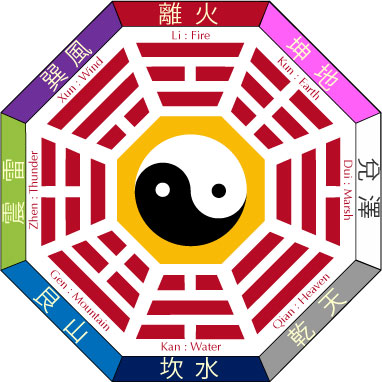
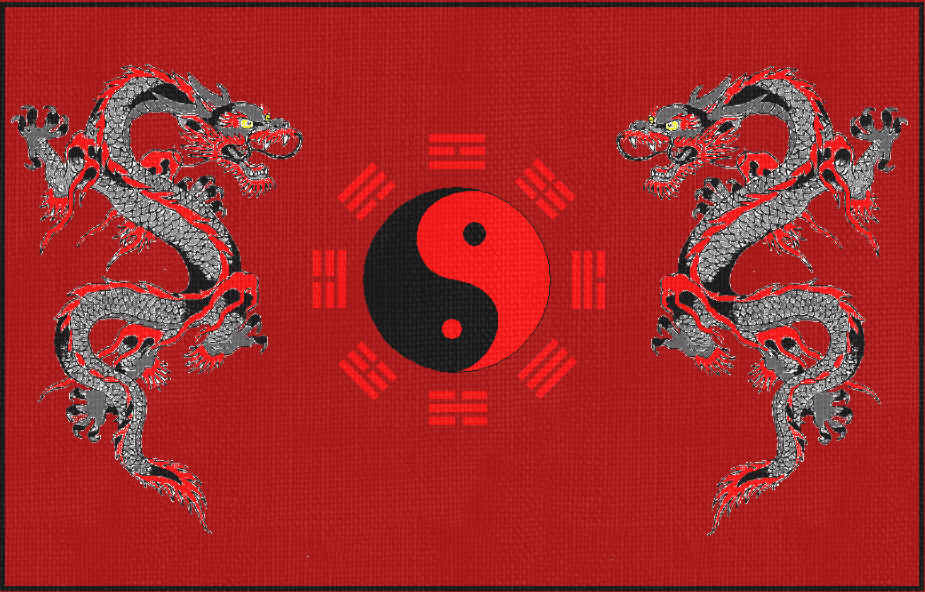
with each other but as somehow one. It is represented by the Yin Yang symbol.
In its rejection of the ability of words to capture its deep ideas and its
embrace of contradictions, Taoism is somewhat Zen-like. It is opposed to
violence to the point of pacifism that is not passive. In regards to Confucianism,
which elevates the status of the scholar in society, Taoism placed the soldier
at the bottom. Whereas Confucianism is deeply concerned with the role of
the individual in society and how to make society function better, Taoism
is more Buddhist-like in turning away from the material world and seeking
to understand oneself.
Taoism and Confucianism represent the two indigenous poles of the Chinese character. Confucius represents the classical, Lao Tzu the romantic. Confucius stresses social responsibility; Lao Tzu praises spontaneity and naturalness. Confucius's focus is on the human, Lao Tzu's on what transcends the human. As the Chinese themselves say, Confucius roams within society, Lao Tzu wanders beyond.
Taoism, while focusing on the transcendental, does not seem to have the concept of a personal god. It recognizes, in the mystical form, the existence of otherworldly entities like ghosts and spirits, and it has a pantheon of deities which include the founders of the philosophy. Some Taoists resort to soothsaying, faith healing and the like, and have rituals that are claimed to have magical effects if done correctly. Taoists also created a church and a sort of 'papal succession' that still exists. So unlike Buddhism and Confucianism, there is plenty of stuff in Taoism that would be beyond the pale of science.
Both Buddhism and Taoism are inward looking, seeking enlightenment and self-improvement as the ultimate goal, with correct interactions with others serving as a means to achieving this self-fulfillment.
The I Ching remains as vital today, in the 21st century as it did thousands of years ago.
The one called Dale Bruder,
is among the cultural innovators who have devised
implements and techniques to use the I Ching in describing and
predicating elements, processes and experiences in practices involving special
uses of the mind and body
The I Ching is a Proven Guide for Success
The Tao Time Guide
Communication Links Voice/Text 520.331.1956 taotime@dalebruder.com
1976
Sojourn Currents of the Occurring Worlds
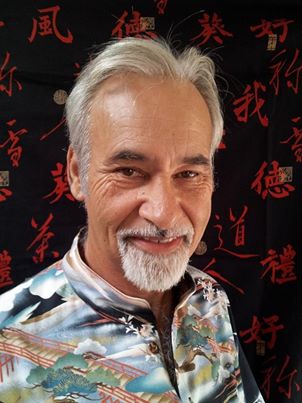
Dale Bruder is a life student of the Tao through the I Ching. Since 1976 he has been applying the I Ching to his self the way psychoanalysts and Zen teachers apply psychoanalysis or Zen to themselves before presenting to others.
His studies of Taoist, Buddhist and Confucian I Ching texts towards mastery of the 'hall of mirrors at the end of a giant kaleidoscope' continues today. His intellectual journey is to match the complexity of ordinary real life with total coherence of the three views of Chinese thought.
Life is cyclical and sequential; a series of events and episodes that advances or reverses goals and aspirations.
Making use of and learning from the experience is a key component of a well lived life. Using the Tao Time path changes the social, cultural, technological and economic push/pulls into a flow that is navigable.
Dale Bruder, a business intelligence consultant, invites you to play the infinite game.
(520) 331-1956
Moons
Tao Time
The ecstasy of timelessness as Begetting, Becoming, Begoningis embodied in Tao Time.
Formulated 3,500 years ago in 64 interactive social and cultural messages about human and social interactions,
The IChing adapts and flexes shape in processes and procedures to navigate the means and matters that flow.
Through observation, detail and predication the IChing channels timeless energies. Following the forms of evolving and devolving leads to an ideal state of being. This is TaoTransformative Tao is one of those instruments. The 72 day sojourn between two and a half lunar cycles builds and releases energy creating momentum in realizing the appropriate manifestation of an inquiry made of the oracle.
Transformative Tao is a 14 part seminar on understanding and applying intentionally called actions.Through a methodological use of the IChing, or the Book of Changes,one can access and apply the wisdom in current times.
Applying the wisdom of the Tao, or the Way, always brings you exactly what you need when you need it to stay successful no matter the circumstances. Everything is useful in the Tao.
The Oracle is the I Ching, a construction of eight trigrams that form a combination of sixty four hexagrams that describes humans social and cultural activities.
 The
Art of Tao Time
The
Art of Tao Time
 Twelve
Branches
Twelve
Branches
 What
Time Is It?
What
Time Is It?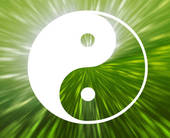 Lunar
Book of Days
Lunar
Book of Days Published
 Seminars